Simple Luxuries
- Also in
- Sleep + Recovery
Travel Wellness Kit for Long Days and Flights
What to pack so you arrive feeling like yourself.
- travel
- flights
- recovery
By Simone · 15 August 2026 · Updated 15 August 2026 · 7 min read
Travel is rarely the tiring part. It is the sitting still for hours in dry, pressurised air, eating at odd times and sleeping badly that leaves you flattened for two days at the other end.
None of that is fixed by a gadget. But a small pouch of the right things, packed once and left packed, quietly removes most of the friction. Keep it small enough to live inside your carry-on permanently — if you have to assemble it every trip, you will forget half of it.
Here is what goes in, grouped by the job it does.
1. For hydration and dry air
Cabin humidity often sits below twenty percent, which is drier than most deserts. Your skin, eyes and throat all notice.
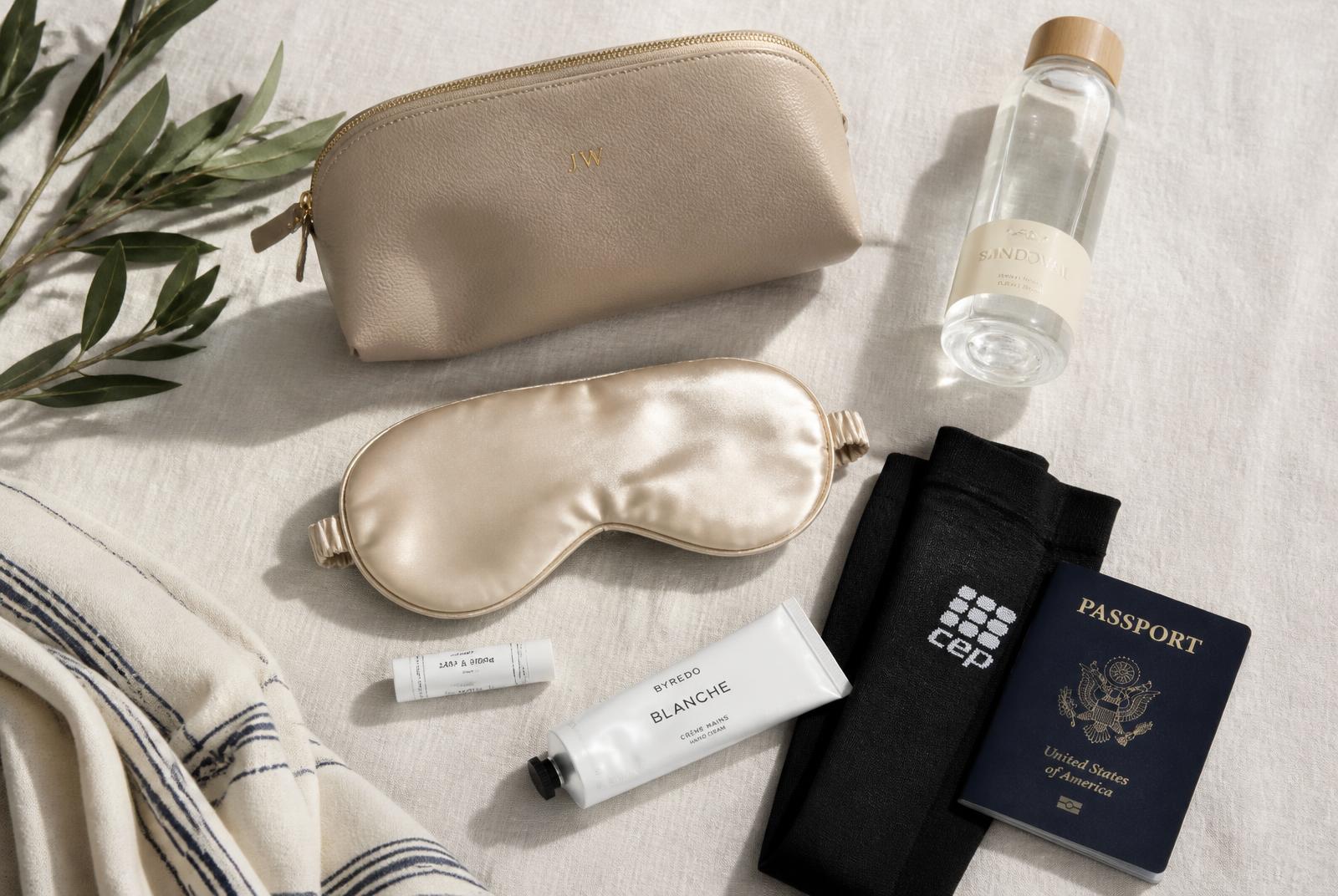
Pack a refillable water bottle — carry it empty through security and fill it airside, because having water at your seat is the single biggest difference between arriving fine and arriving foggy. Add a heavier moisturiser decanted into a travel pot and reapplied once mid-flight, lip balm, hand cream and lubricating eye drops. Wear glasses rather than contact lenses if you can, and skip full makeup — it will not survive the flight anyway.
2. For sleeping on board
If there is one part of the pouch worth spending money on, it is this — sleeping properly is what decides how you feel at the other end.
A silk eye mask that blocks light completely and earplugs that actually seal — foam or a decent noise-reducing pair. Cabin noise is constant and low, and it is more tiring than people realise. Add something soft between your neck and the seat, and these three things will do more for how you feel on arrival than anything else you carry.
3. For comfort over long sits
One warm layer — a large scarf or a light merino sweater doubles as a blanket and a pillow, and cabins are almost always colder than you expect. Compression socks are worth it on anything over about four hours, particularly if you are prone to swollen ankles, and a spare pair of soft socks to change into makes the last hours far more pleasant.
4. For eating on your own terms
Airport food is engineered for impulse, and aeroplane meals arrive on a schedule set by the crew rather than your appetite. Both leave you swinging between too full and suddenly ravenous.
Keep something with protein and fibre in the bag permanently — nuts, a good bar, oatcakes and nut butter — and add a piece of fruit on the day. It means you can decline a tray that arrives at three in the morning body-time and still not arrive hollow. Alcohol and a second coffee both feel like part of the ritual and both work against you; one drink is fine, but treat it as extra rather than instead of water.
5. The practical handful
Painkillers, antihistamine, plasters, any prescription medication in its original packaging, and rehydration sachets if you are travelling somewhere hot. Then chargers, a spare cable and a battery pack — in the same pocket, every time, so you never dig for them.
And if you are heading somewhere you will spend real time outdoors, pack a sunscreen suited to long days in the sun.
The short version
Water at your seat, a warm layer, something over your eyes, socks that help your circulation, and food that holds you. Build it once, keep it packed, and you never have to think about any of it again.
Found this useful? Save it for later.
Save to Pinterest