Strength + Movement
Why a Daily Walk is the Most Underrated Wellness Habit
No kit, no membership, no rules. Just twenty minutes of ordinary walking, done often enough to matter.
- walking
- movement
- habits
- everyday wellness
By Simone · 29 July 2026 · Updated 14 August 2026 · 6 min read
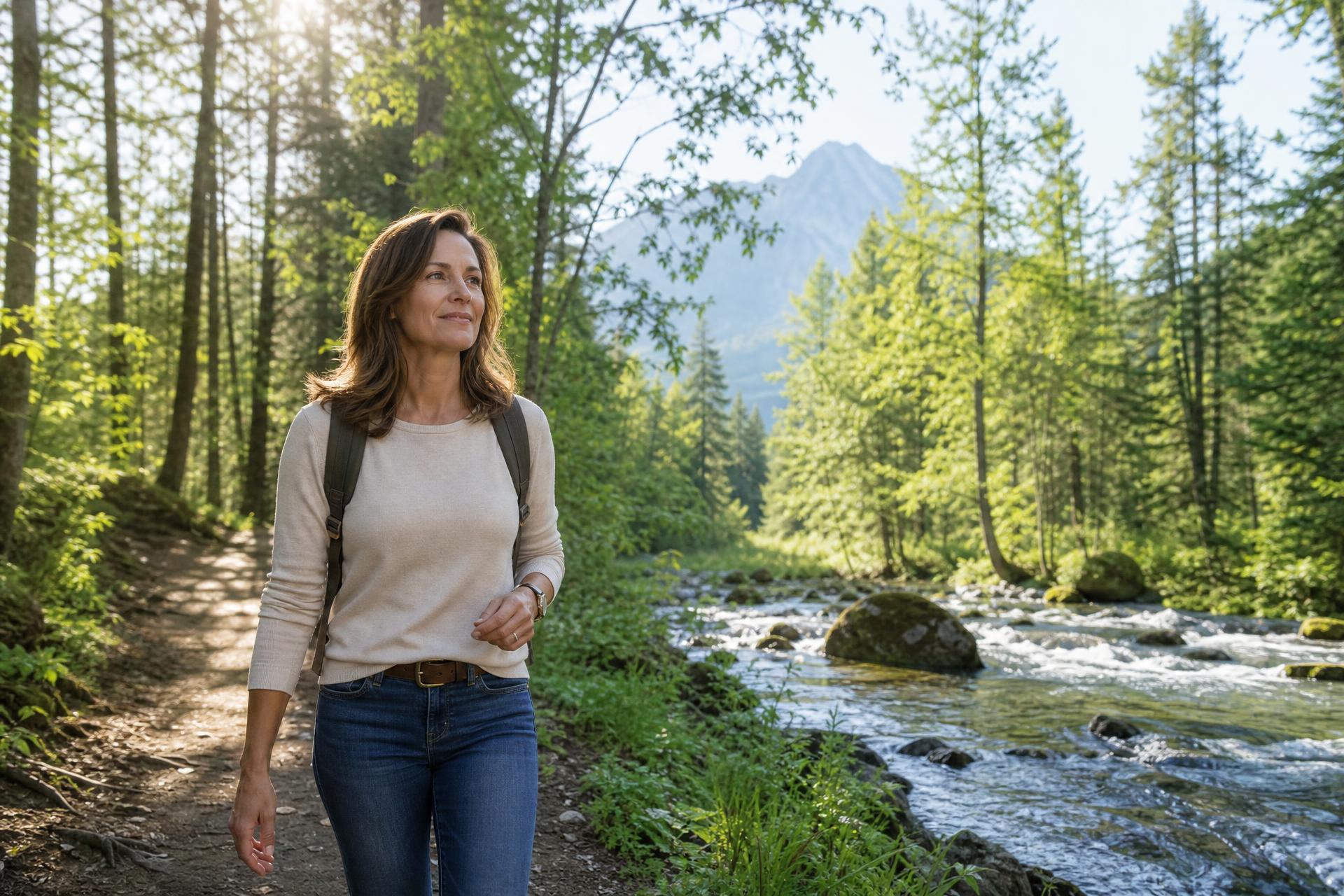
There is a version of wellness that asks a lot of you: the class pass, the early alarm, the outfit, the plan. And then there is walking — the thing you already know how to do, which costs nothing, needs no booking, and asks only that you put your shoes on and go outside.
It is easy to dismiss precisely because it is so ordinary. But ordinary is the point. The habits that change how you feel are rarely the impressive ones. They are the ones you keep.
Why walking earns its place
A daily walk quietly touches most of the things people are chasing elsewhere. It gets your heart working at a gentle, sustainable intensity. It puts load through your hips, knees and ankles in a way that keeps them comfortable and capable. It moves blood sugar in a helpful direction after meals. And it gives your nervous system something most days are missing — a stretch of time where nothing is being asked of you.
It is also the rare form of movement that does not have to be recovered from. You can walk on a tired day, a sore day, a busy day. That is what makes it compound.
The twenty-minute rule
Twenty minutes is long enough to feel like something and short enough to survive a bad week. If twenty feels ambitious, start at ten. The number you can repeat beats the number that impresses you.
Pace matters less than most people assume. Aim for a walk where you could hold a conversation but would rather not sing — brisk enough to warm you, easy enough that you are not negotiating with yourself the whole way.
Make it automatic, not motivational
Motivation is a poor foundation. Anchoring is better. Attach the walk to something that already happens without your input: the end of lunch, the school run, the first coffee, the moment you close your laptop. The habit borrows the reliability of the thing it is attached to.
A few small frictions to remove:
- Shoes by the door, not in a cupboard upstairs.
- One default route so you never spend energy deciding where to go.
- A layer that handles bad weather, because the day you would skip is usually a weather day.
Walk after you eat
If you only walk once a day, make it after your largest meal. A gentle walk after eating helps you feel steadier through the afternoon and takes the edge off the slump that sends most of us looking for a second coffee.
It does not need to be a proper outing. Ten minutes around the block, still holding your tea, counts.
What it does for your head
Walking is one of the few activities that occupies your body just enough to loosen your thinking. Problems reorder themselves. Conversations you were dreading get rehearsed and shrunk. Some of it is the movement, some of it is the daylight, and some of it is simply being somewhere that is not the room where the problem lives.
Morning light in particular helps set the rhythm that decides how easily you fall asleep that night. A walk before nine in the morning is doing quiet work on a bedtime you have not reached yet.
Make it something you look forward to
The walks that last are the ones with something attached: an audiobook you are saving, a phone call with your sister, a friend who expects you at the corner at half past seven. Pleasure is not a distraction from the habit — it is the reason the habit survives.
Vary the route when it goes stale. Green space, water, a hill, a different street. Novelty is cheap and surprisingly effective.
Track gently, if at all
A step counter can be useful for noticing patterns — that you move a lot on Tuesdays and barely at all on Sundays. It stops being useful the moment it turns a walk into a target you can fail.
If you want a number, count days walked in a month rather than steps in a day. Twenty-two out of thirty is a strong month, and it leaves room for being human.
Progress, when you want it
Once the daily walk is genuinely automatic, there are easy ways to ask more of it without adding time:
- Add a hill, or take the stairs route instead of the flat one.
- Walk the middle five minutes faster than the rest.
- Carry something — a rucksack with a few kilos in it changes the work considerably.
- Extend one walk a week to an hour and treat it as the good one.
None of these are necessary. They are simply there if the habit gets so comfortable that you want more from it.
On the days you do not want to
Go for five minutes. Give yourself explicit permission to turn around. You almost never will, and on the days you do, you have still protected the habit, which is the only thing that actually matters.
Missing one day is nothing. Missing three starts to become a decision. Keep the streak loose but keep it alive.
The quiet case for walking
Nobody will be impressed that you walk. It will not look like much from the outside, and it will not feel like much on any given day. But six months of most days is a different body, a steadier mood and a better night's sleep — built out of something you were always able to do.
Put your shoes by the door tonight. Start tomorrow, after lunch, for ten minutes.
Found this useful? Save it for later.
Save to Pinterest