Healthy Home
Home Detox: Kitchen Edition
Simple swaps to reduce plastics and other contaminants where you cook, store and clean
By Simone · 14 August 2026 · 4 min read
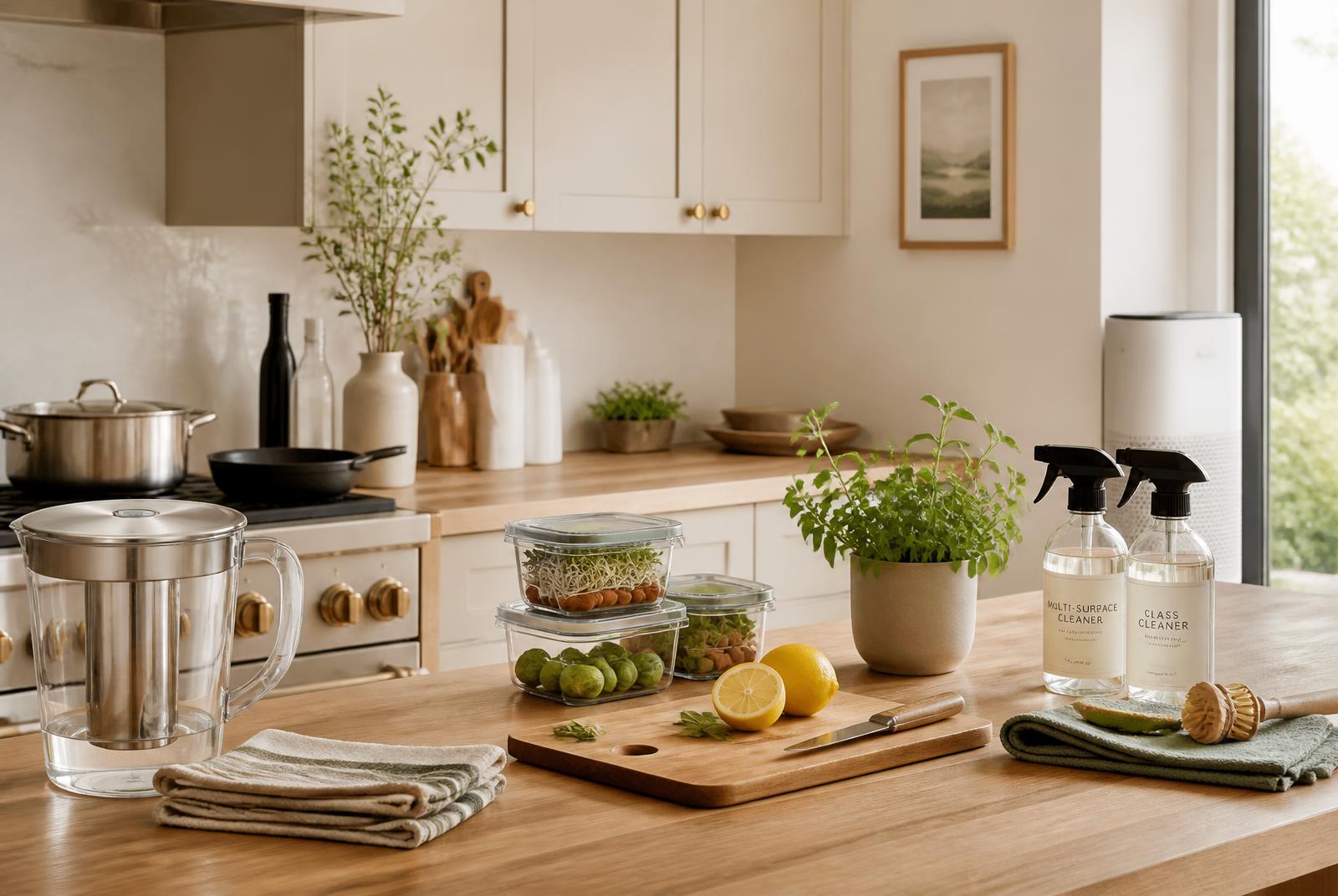
The kitchen is more than a room. It is where the day begins, meals are made and people come together. Because we use it so often, it is also a natural place to make small changes that support a healthier, calmer home.
That does not mean creating a perfect, plastic-free space or replacing everything we own. It means becoming a little more intentional about what touches our food, what we use to cook, what we drink and what we breathe while we clean.
This is not about fear, perfection or throwing away what still works. It is about making the next choice a little more thoughtfully—and creating a kitchen that feels cleaner, calmer and better suited to the life happening inside it.
1. Storage: Rethink what touches your food
Plastic food storage is not automatically a problem. The most useful questions are how the container is being used, whether it is designed for that purpose and whether it is still in good condition.
Heat is the first thing to reconsider. Rather than microwaving food in plastic whenever possible, transfer it to a glass or ceramic dish. The same applies when storing something very hot: allow it to cool slightly or use a container intended for hot food.
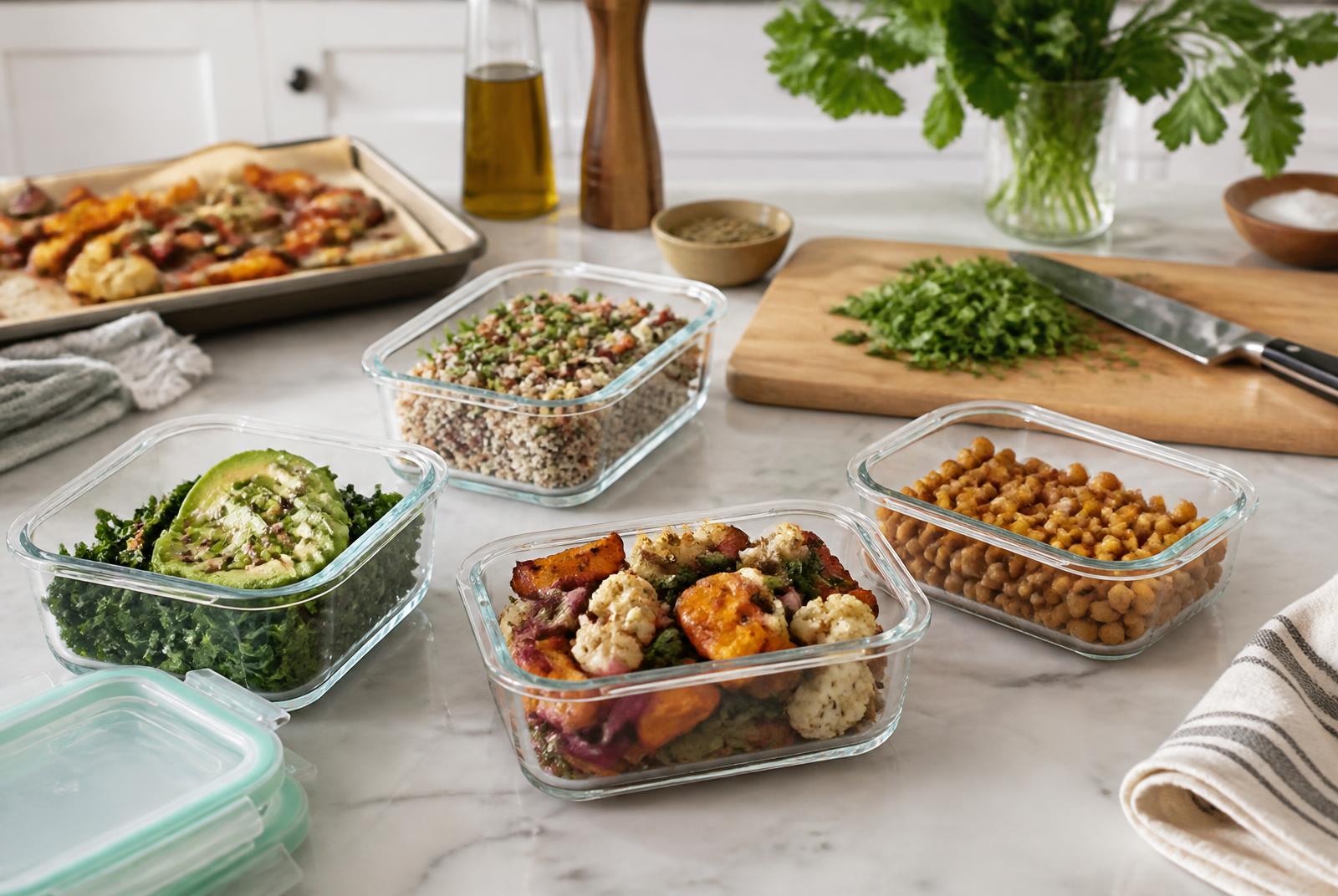
Old, cloudy, deeply scratched or cracked containers are also worth replacing. Glass is a straightforward alternative for leftovers because it is easy to see, clean and organise, and it makes a week of prepped lunches and dinners far easier to manage.
Stainless steel is useful for packed lunches and dry storage. Reusable silicone bags can replace some disposable zip-top bags, while silicone stretch lids can cover bowls without another roll of cling film.
Keep suitable plastic containers for cool, dry storage, and replace the ones that are worn or repeatedly exposed to heat.
2. Cookware: Look again at nonstick
Nonstick pans are coated in PFAS — the same "forever chemicals" you're reducing elsewhere in the house. The trouble is the coating doesn't stay put. Overheat an empty pan and it releases fumes; scratch it and it flakes into your food. And because the coating wears out quickly, you end up buying and binning coated pans again and again.
The clean fix is to cook on materials with no coating to break down in the first place. Cast iron is the easiest place to start — a single cast-iron skillet costs very little, lasts for decades and becomes naturally nonstick as it seasons. Stainless steel handles everything else: searing, sauces, boiling, browning. Between the two, you can cover almost everything a nonstick pan does.
If you genuinely want the nonstick feel for eggs or pancakes, choose a ceramic-coated pan, which gives easy release without PFAS. Just treat it as the one pan you'll replace every couple of years — the coating wears out — rather than the centre of your kitchen. Whatever you cook on, ventilate—run the range hood or open a window—and don’t leave an empty pan ripping hot on the hob.
3. Water: Filter what you drink—and cook with
A filter is not necessary for every home. Water concerns vary by location, plumbing and supply, so the best approach is to identify the issue before buying a product.
Concerned about lead? Older pipes and fittings can introduce lead into drinking water. Use cold water for drinking and cooking, let the tap run briefly if it has been sitting and choose a filter certified to reduce lead if needed.
Concerned about PFAS? Choose a filter specifically tested to reduce PFAS, such as a suitable reverse-osmosis system. A countertop reverse-osmosis unit can work for households that need more extensive filtration without plumbing work.
Mostly concerned about taste or odour? A certified filter pitcher may be enough. Check what each filter is designed to remove, and replace cartridges as directed.
If your water is safe and tastes fine, you may not need a filter at all. If you do use one, remember that drinking water is only part of the picture—use filtered water for cooking, too. WHO identifies lead as a global concern, but the risks are not the same in every household.
4. Boards and tools: The small swaps that add up
Plastic cutting boards seem harmless, but every cut shaves off tiny particles, and a well-used board can shed a surprising amount of microplastic into your food over time. The same logic applies to worn plastic utensils that live in hot pans.
Wooden boards are a practical alternative when they are cleaned, dried and maintained properly. They are comfortable to use and generally gentle on knives. Bamboo is another option, although the construction and care requirements vary between products.
For cooking utensils, wood and stainless steel are durable choices for many everyday jobs. Silicone can be useful around coated cookware, provided it is designed for the temperatures involved.
One swap worth knowing: black plastic utensils and spatulas have raised concerns about contaminants carried over from recycled plastics. They’re inexpensive to replace, which makes it an easy, low-stakes upgrade.
The final edit
A “detoxed” kitchen isn’t one where you’ve replaced everything at once. It’s built from a few choices that quietly lower your exposure:
- Move food into a suitable glass or ceramic dish before reheating.
- Replace containers, boards and utensils when they become worn.
- Rethink non-stick cookware when a pan needs replacing.
- Choose filtration based on specific, verified performance.
A detox isn’t about fear or perfection. It’s about making the space where you feed yourself, and the people you love, a little cleaner—one sensible swap at a time.
Found this useful? Save it for later.
Save to Pinterest